
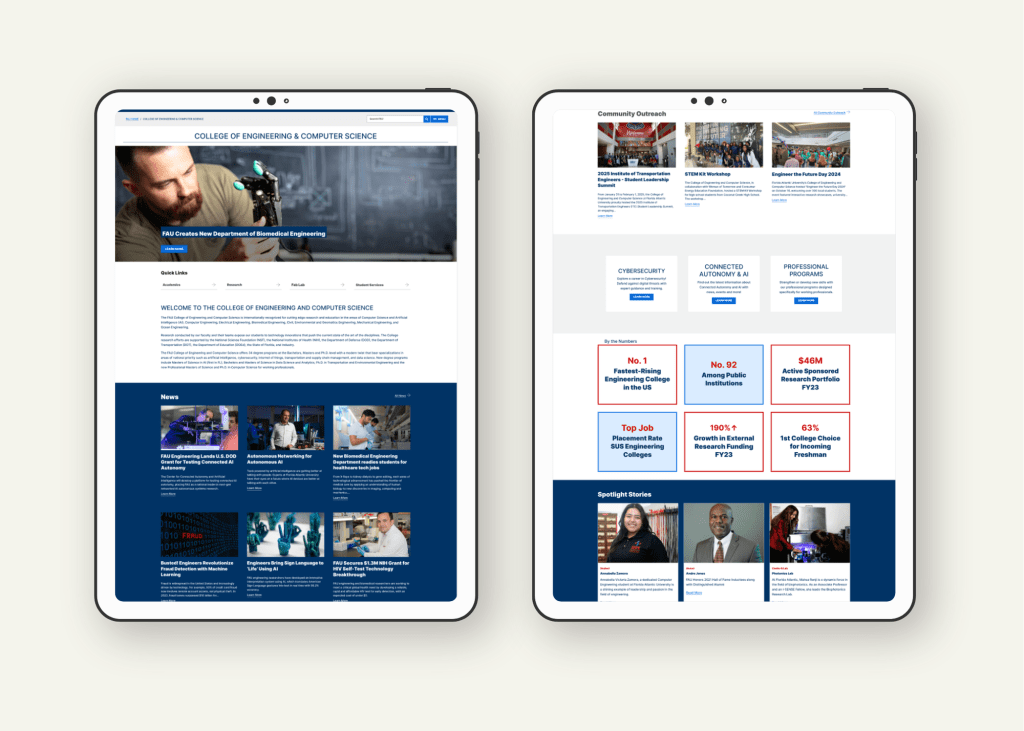
Delivering intuitive, accessible, and mobile-first web experiences for academic communities!
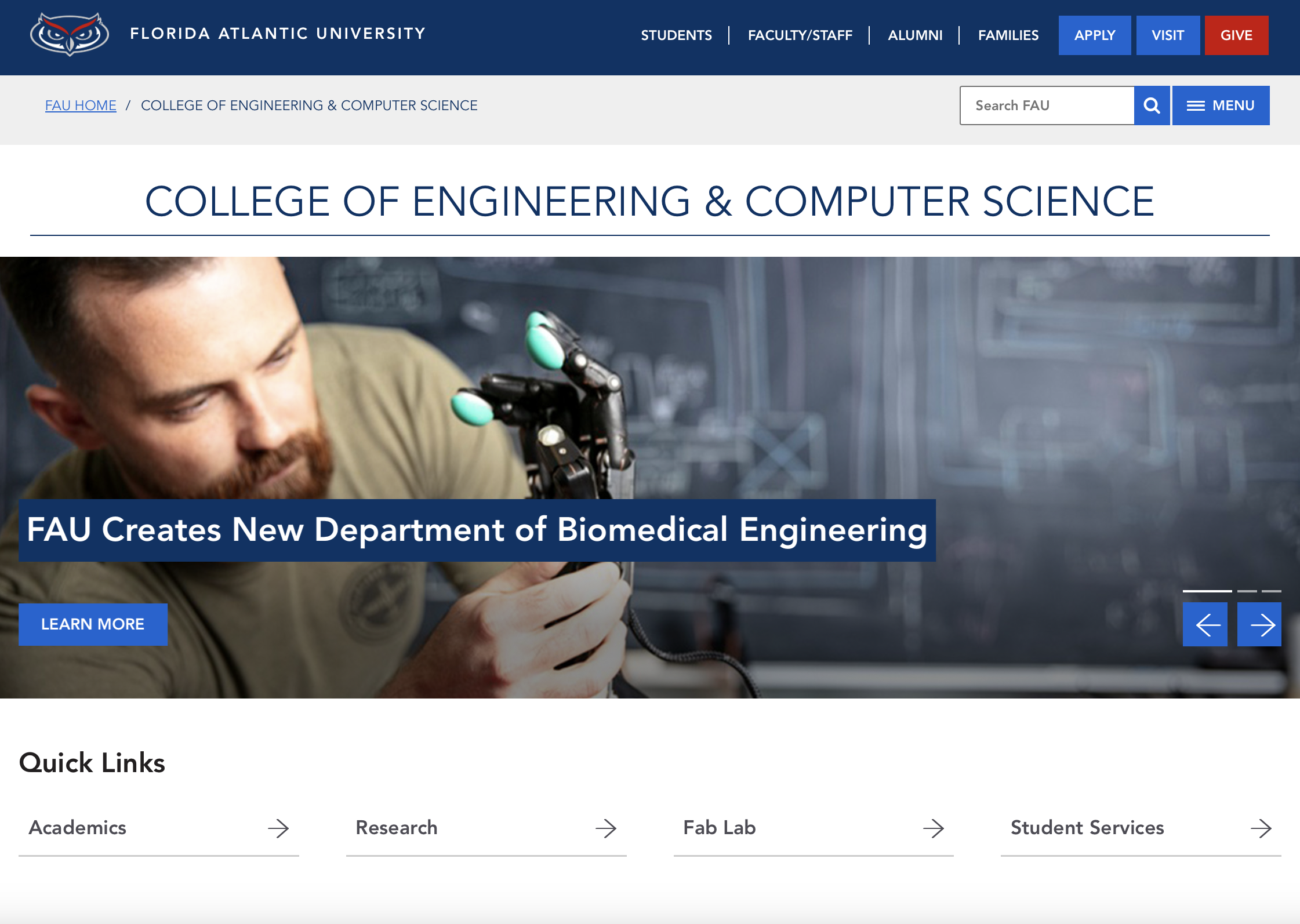
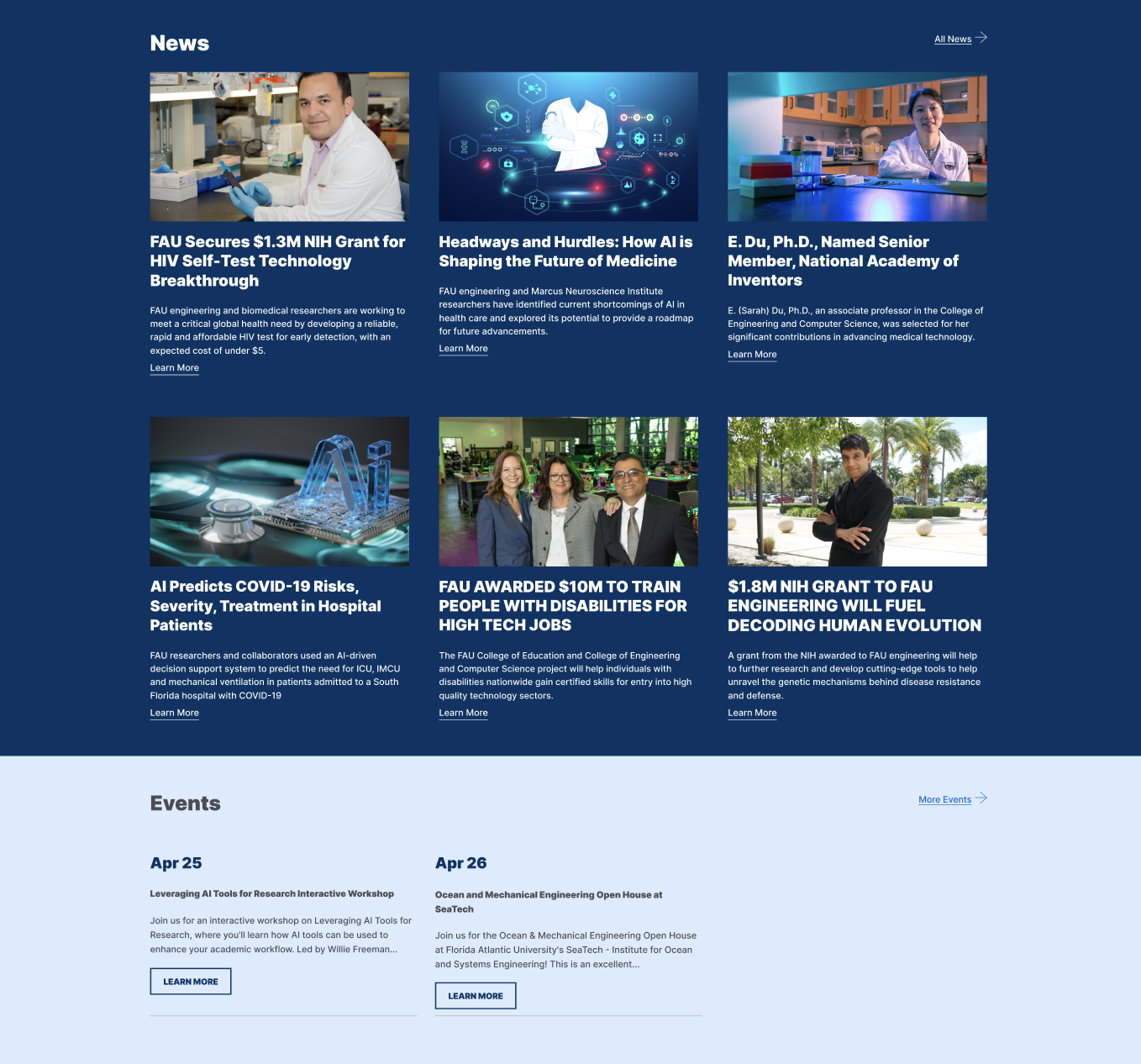
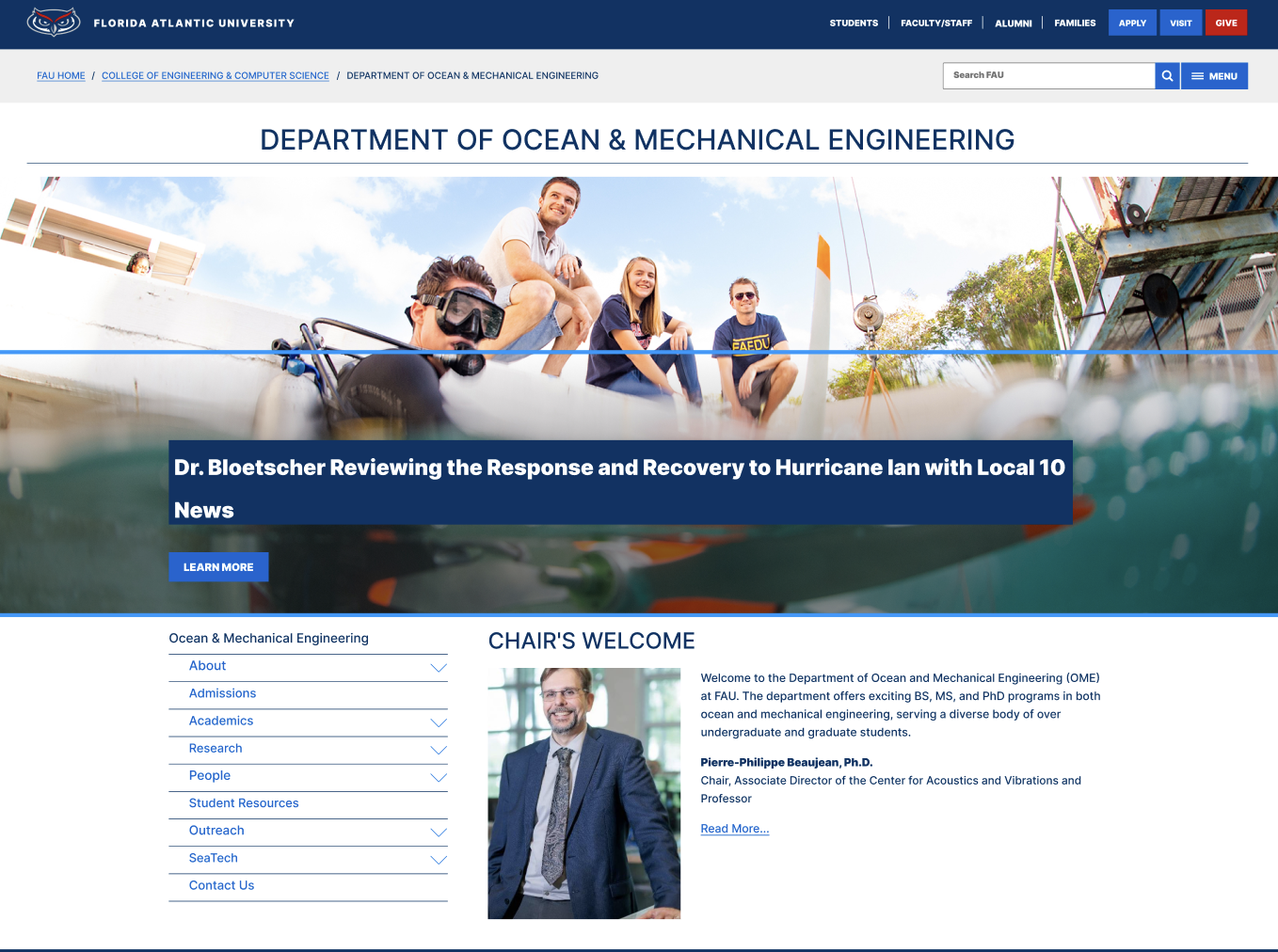
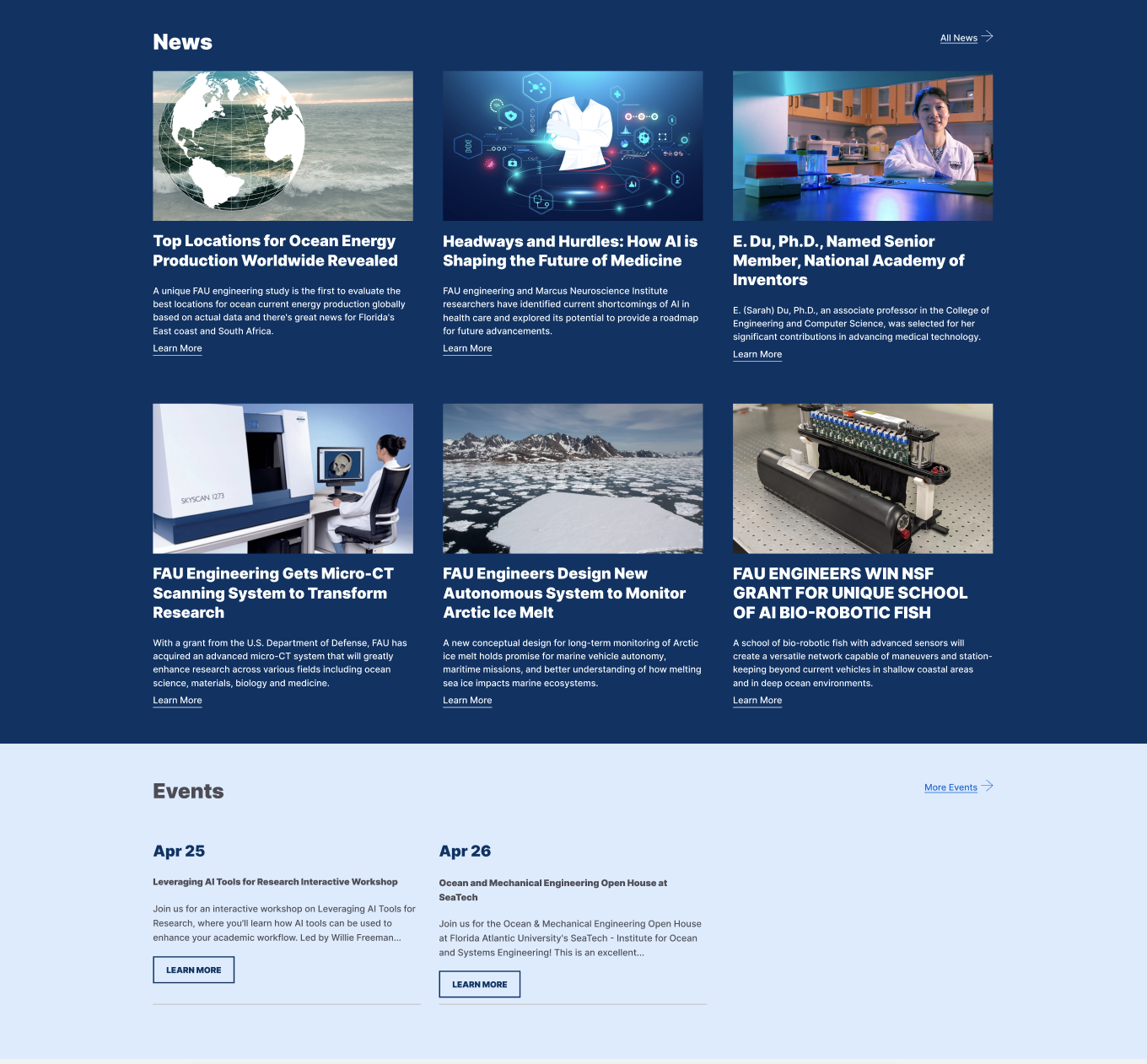
Florida Atlantic University (FAU) engaged me to support the redesign of several departmental websites. The primary objective was to modernize the user experience, improve mobile responsiveness, enhance accessibility, and better align the design with the university’s updated branding guidelines.
Deliverables
Website Design
Timeline
3 months
Client
Florida Atlantic
Role
UX Designer


Delivering intuitive, accessible, and mobile-first web experiences for academic communities!
The Problem.
Many departmental websites at FAU were built with outdated layouts, inconsistent branding, and limited responsiveness. As a result, users—primarily prospective students, current students, and faculty—faced difficulties navigating the sites, accessing key information, and using the websites on mobile devices. Accessibility gaps also limited usability for all audiences.
The Solution.
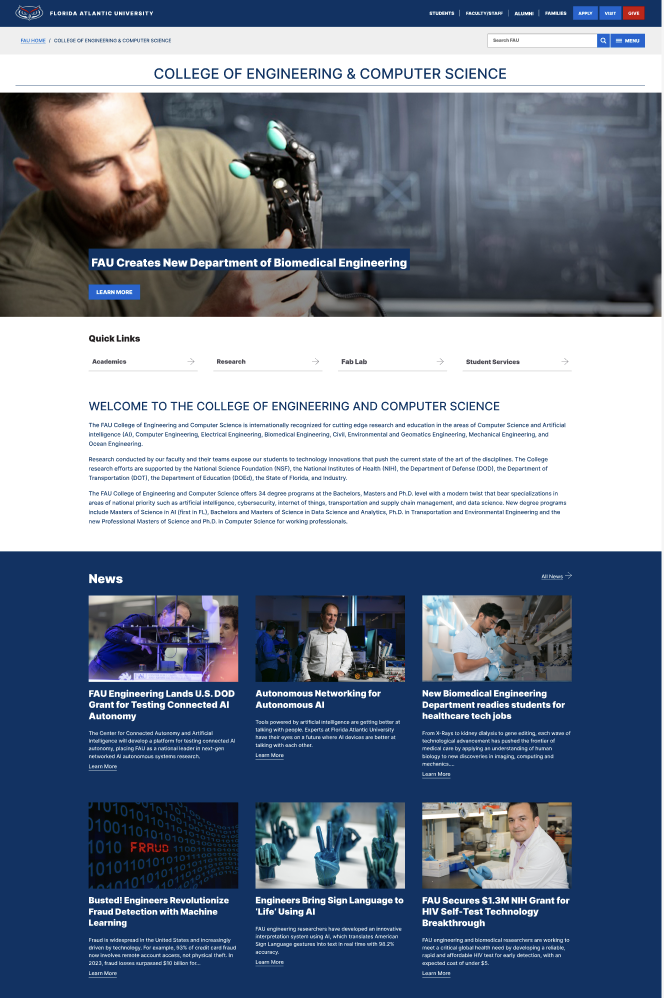
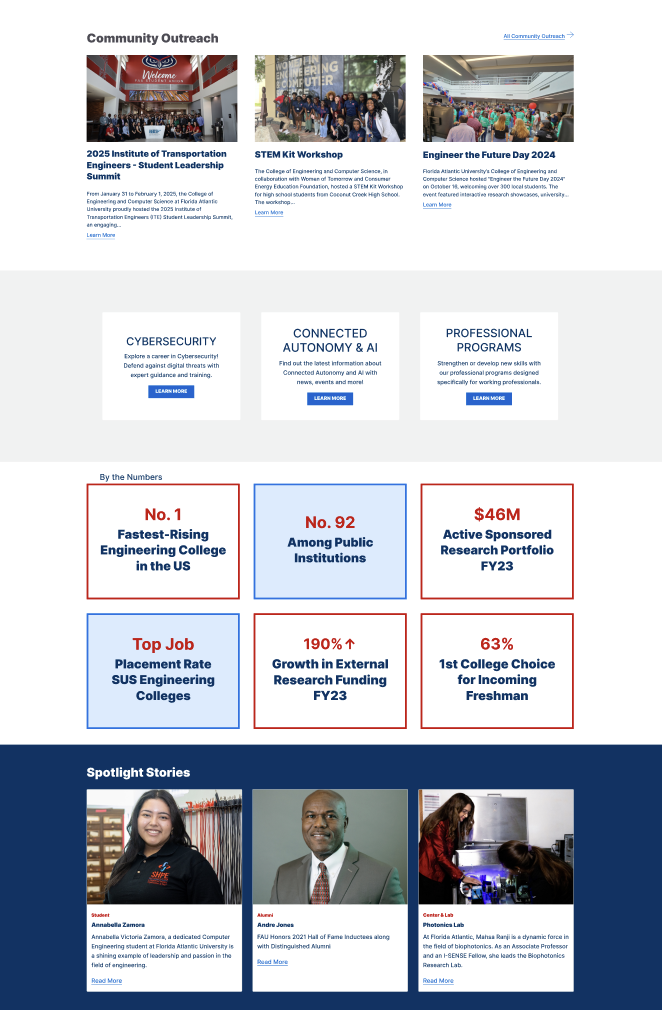
Redesign departmental websites to prioritize mobile responsiveness, simplify navigation, align with FAU’s updated digital brand standards, and enhance accessibility—all while working within the constraints of the existing CMS.
Results
Mobile-First Redesign
Templates were restructured to prioritize mobile usability.
- Improved navigation and tap targets on smartphones and tablets
- Faster load times and optimized image use
Streamlined Content Structure
Content was reorganized to improve clarity and user flow.
- Reduced page clutter and redundant information
- Clearer CTA placement driving more user actions
Accessibility Enhancements
Design updates were guided by WCAG 2.1 AA compliance standards.
- Increased color contrast ratios
- Improved screen reader compatibility
- Enhanced keyboard navigation across templates
Consistent Visual Identity
Templates enforced FAU branding across all redesigned department sites.
- Unified look and feel strengthened institutional trust
- Easier future scaling and maintenance within Omni CMS
Lessons Learned
- Mobile-first and accessibility-first design must guide every decision to truly future-proof university websites
- Collaboration between designers, developers, and content managers ensures better technical feasibility and smoother implementation
- A strong design system reduces inconsistencies and future rework while supporting scalability
 Tatyanna.design