
Where Dreams Unfold on the Big Screen
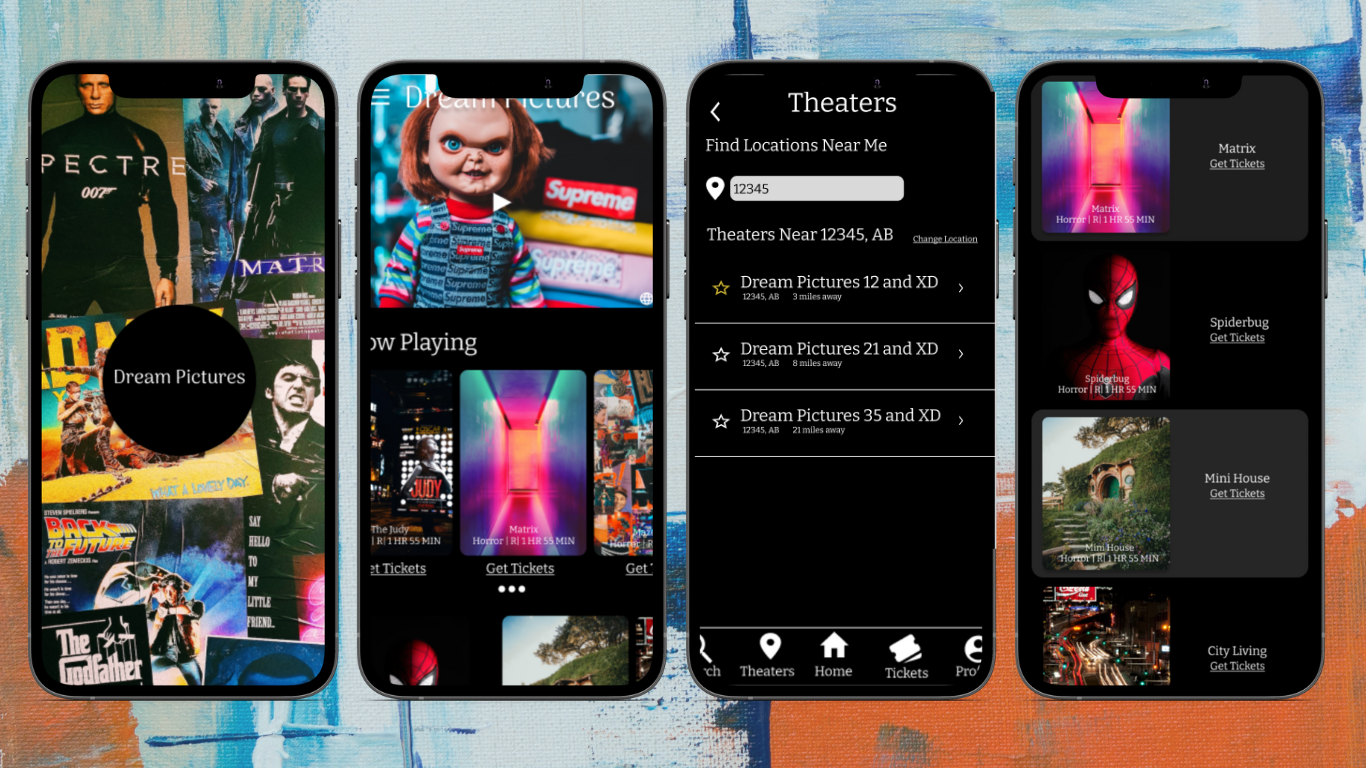
Dream Pictures stands as a local cinema situated in the outskirts of a bustling metropolis. Our mission revolves around providing a blend of opulence and accessibility, ensuring an exquisite yet economical cinematic journey. Tailored to the needs of busy individuals such as professionals and students, the Dream Pictures app caters to those who cherish the theater experience despite their time constraints.
Deliverables
Mobile App
Timeline
1 Month
Client
Dream Pictures
Role
UX Designer/ UX Researcher
Putting users first in every digital interaction
The Problem.
In today’s fast-paced world, the demands of bustling professionals and dedicated students leave them with little patience for extended queues at movie ticket counters.
Diverging from its more established counterparts, Dream Pictures presently lacks a dedicated mobile application. Tasked with this challenge, my objective was to conceptualize an app that aligns seamlessly with the immediate requirements of its clientele.
The Solution.
The ultimate aim was to fashion an innovative app for Dream Pictures, empowering users with the convenience of reserving tickets and selecting preferred seats well in advance. This foresight not only preserves their precious time but harmonizes perfectly with their hectic timetables.
Project Process
In my quest to approach my challenge with a solution-focused mindset, I turned to the comprehensive framework of the Design Process methodology. This methodology, consisting of five distinct yet interconnected stages, served as my guiding light: Empathize, Define, Ideate, Prototype, and Test. At the outset, I delved into the Empathize phase, where I sought a deep understanding of the intricacies and nuances of the issue at hand. This involved putting myself in the shoes of the stakeholders, discerning their pain points, aspirations, and expectations. By immersing myself in their perspectives, I laid a solid foundation for the subsequent phases.
The Define stage followed, wherein I distilled the insights gathered during the Empathize phase into a concise problem statement. This articulation of the problem served as a guiding star, directing my efforts and keeping me aligned with the ultimate goal. As I transitioned into the Ideate phase, creativity took center stage. Drawing from the insights obtained earlier, I let my imagination run free, generating a plethora of potential solutions. This stage encouraged thinking outside the box, exploring unconventional avenues, and fostering a spirit of innovation.
With a diverse range of ideas at hand, I moved into the Prototype phase. Here, I transformed selected concepts into tangible representations, be it sketches, wireframes, or even basic models. These prototypes provided a tangible means to visualize and assess the viability of each solution, steering me closer to the most effective one.Finally, the Test phase marked the culmination of this iterative process. I subjected the prototypes to real-world scenarios and gathered feedback from potential users. This step was pivotal in refining the solutions, addressing unforeseen challenges, and optimizing the chosen approach.
By meticulously navigating through each of these Design Thinking stages, I was able to not only reframe my initial problem but also arrive at a human-centered space where innovative solutions were cultivated, refined, and tailored to the needs of the stakeholders.
Competitive Analysis
I conducted a comprehensive research effort encompassing both the primary competitors of Dream Pictures and those operating indirectly within its sphere. This analysis involved a meticulous comparison across various dimensions, encompassing geographical reach, product and service portfolios, pricing structures, organizational scale, target demographic focus, and distinctive value propositions.
Upon scrutinizing the landscape of Dream Pictures and its direct rivals, a noteworthy pattern emerged. All three of these immediate competitors exhibited a strategic alignment towards the same customer segments. Additionally, a salient commonality prevailed among them: each competitor operated within the realm of medium to large-scale enterprises, indicating a substantial presence within the industry.
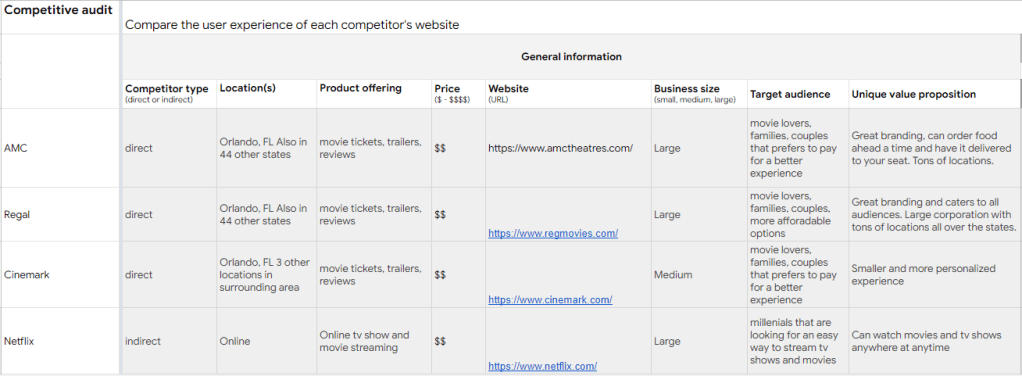
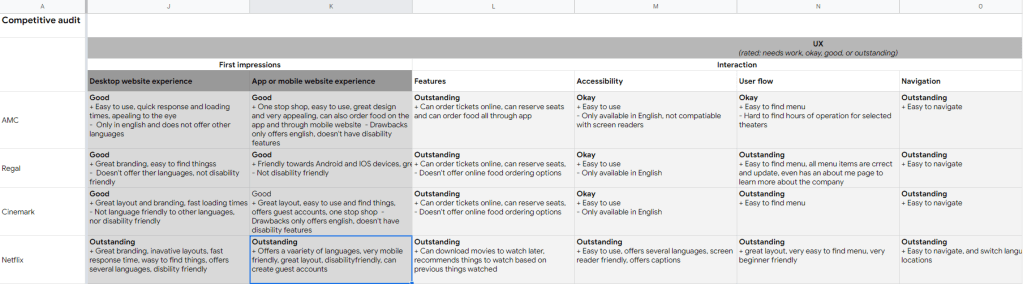
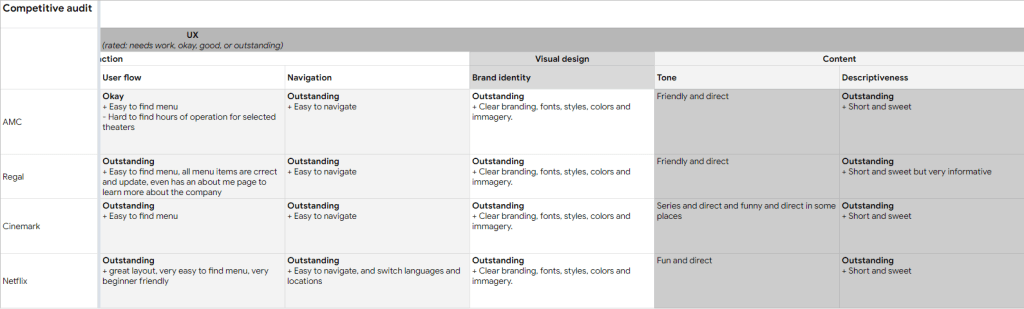
Upon my initial exploration of the websites belonging to the three direct competitors, a resounding sentiment of user-friendliness pervaded. These platforms exhibited a blend of effortless navigation, great branding, and adaptability to mobile devices. Nonetheless, an intriguing commonality emerged among these contenders: a noticeable gap in catering to the needs of disabled individuals or those seeking content in languages other than English. This observation underscored a unique opportunity to leverage this deficiency in order to enhance the Dream Pictures app.
Guided by this insight, my endeavor revolved around ensuring that the Dream Pictures app stood as an exemplar of inclusivity and accessibility. The objective was clear: to create an app that addressed the challenges faced by users with disabilities and those seeking non-English content. This approach aimed not only to level the playing field but also to seize a distinct competitive edge in the market.
In contrast, the indirect competitor of Dream Pictures emerged as a standout performer on multiple fronts. This rival boasted a multifaceted approach, offering content in a variety of languages, seamless adaptability to mobile interfaces, intuitive navigation, and a noteworthy commitment to accessibility. This comprehensive superiority underscored the significance of not merely meeting industry standards but exceeding them, by setting a benchmark for a truly inclusive and user-centric experience.
Having concluded the thorough audit of the competitors, I harnessed the distinct strengths exhibited by each of the direct rivals to design an app infused with superior features. Concurrently, I took the vulnerabilities identified within the direct competitors’ offerings, strategically repurposing them as the cornerstone of the Dream Pictures app’s differentiating factor, thereby setting it apart from its counterparts.
Interview
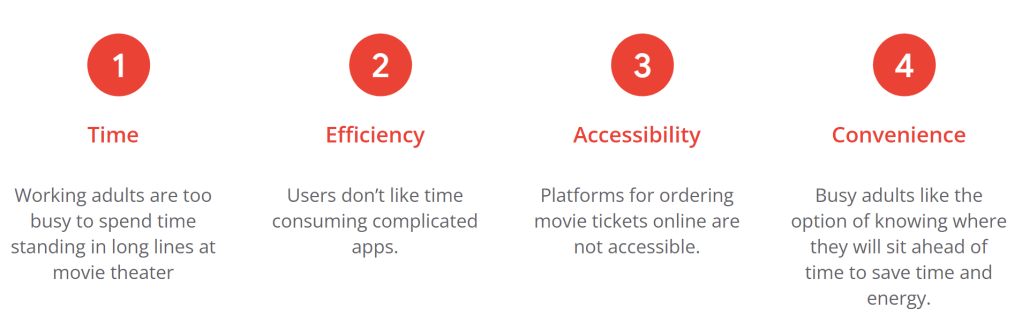
In pursuit of this endeavor, I undertook a series of interviews and employed empathy maps to delve deep into the nuanced needs of the users. Central to the project’s focus were working adults whose tight schedules left little room for enduring lengthy queues or deciphering intricate ticketing applications.
This core user demographic corroborated the preliminary assumptions for the movie ticketing app’s target audience. However, the research unearthed a more comprehensive spectrum of challenges beyond time constraints. It was evident that the hurdles preventing users from enjoying a seamless cinema experience extended beyond mere time limitations. Among these issues, the language barrier emerged as a prominent impediment, further complicating the movie-going experience for a substantial portion of potential customers.
Persona Development
Meet Janet, a dynamic and driven individual who seamlessly juggles her roles as a dedicated full-time student and a savvy business analyst. Given her perpetual time constraints, Janet ardently seeks a swift and streamlined solution for reserving movie tickets that aligns seamlessly with her demanding schedule.
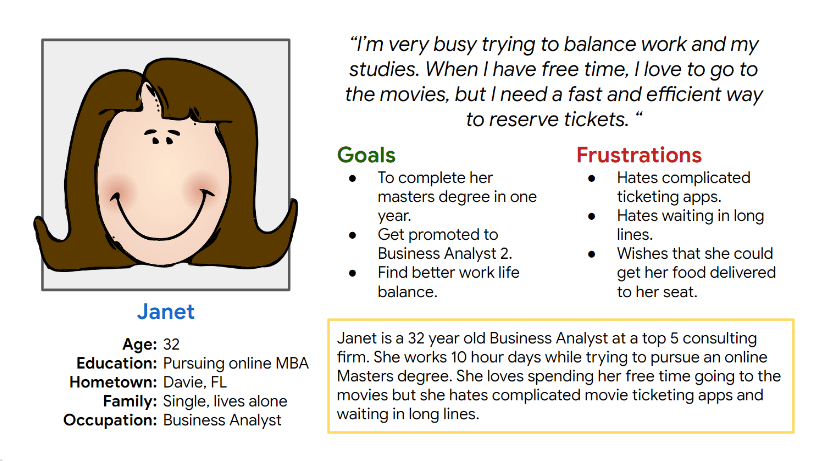
User Journey Map
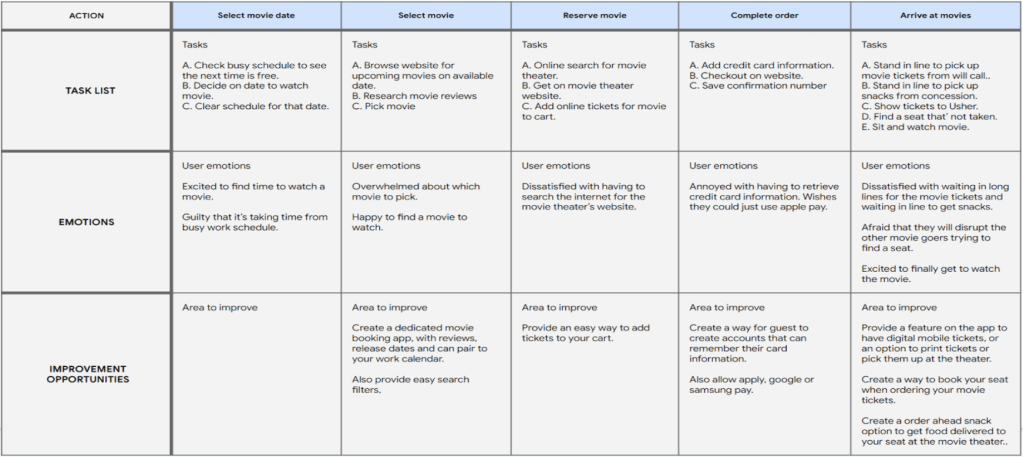
Upon engaging in a comprehensive interview with Janet, I gained a profound insight into the pivotal significance of crafting a rapid and trailblazing application tailored to the needs of industrious professionals. Through the creation of a meticulous user journey map, I embarked on a journey of comprehending the intricate hurdles Janet confronted in her pursuit of attending movies amidst her bustling schedule.
Drawing from this profound understanding, my aspiration materialized as an innovative app that transcends the conventional. It encompasses an array of features including movie reviews, enticing previews, release schedules, seamless integration with work calendars, the provision for guest accounts, and an assortment of payment options to cater to diverse preferences. Furthermore, I sought to address other dimensions of improvement such as facilitating advanced food ordering choices and enabling seat selection, all aimed at elevating the user experience and refining the entire cinematic journey.
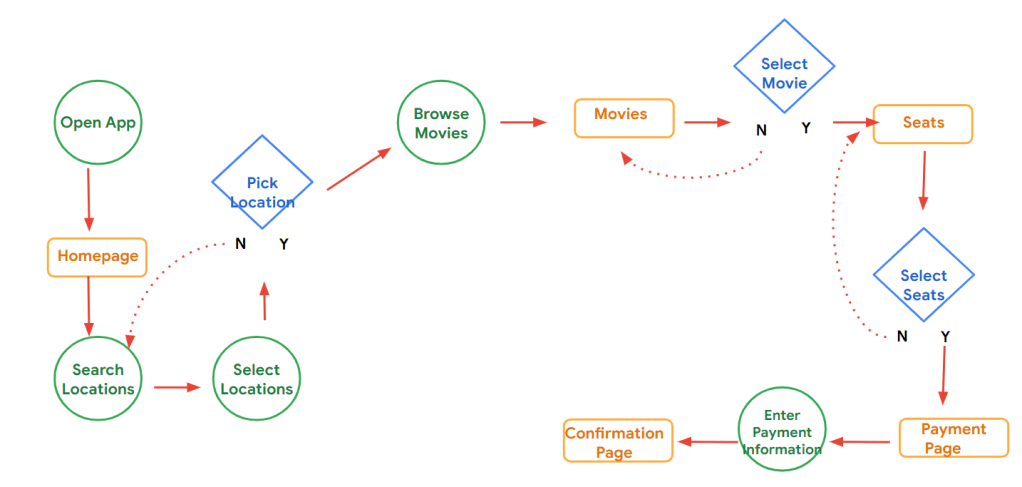
Task Flow
My endeavor centered on fashioning a task flow that not only epitomized user-friendliness but also intricately aligned with the exacting requirements of our valued users.
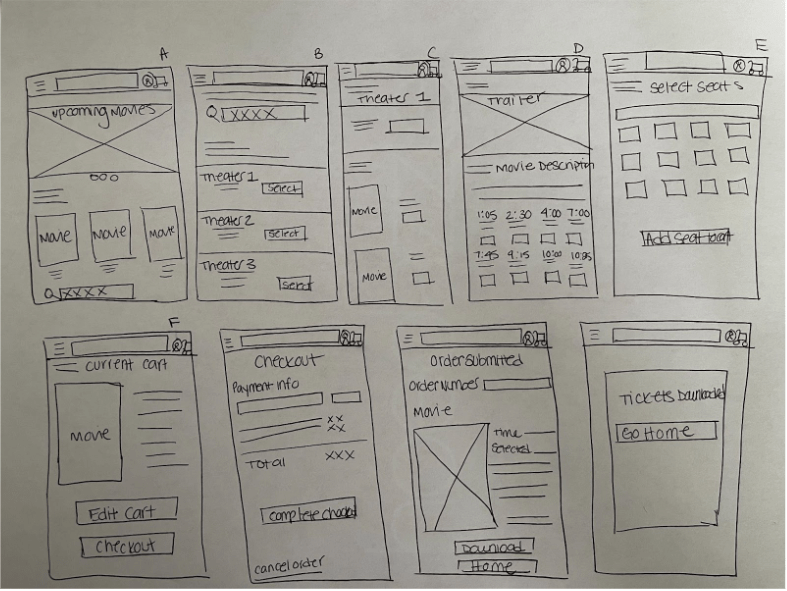
Lo-fi Sketches
As the initial design phase progressed, I remained steadfast in grounding the screen designs in the rich tapestry of insights gleaned from user research and feedback.
Digital Wireframes
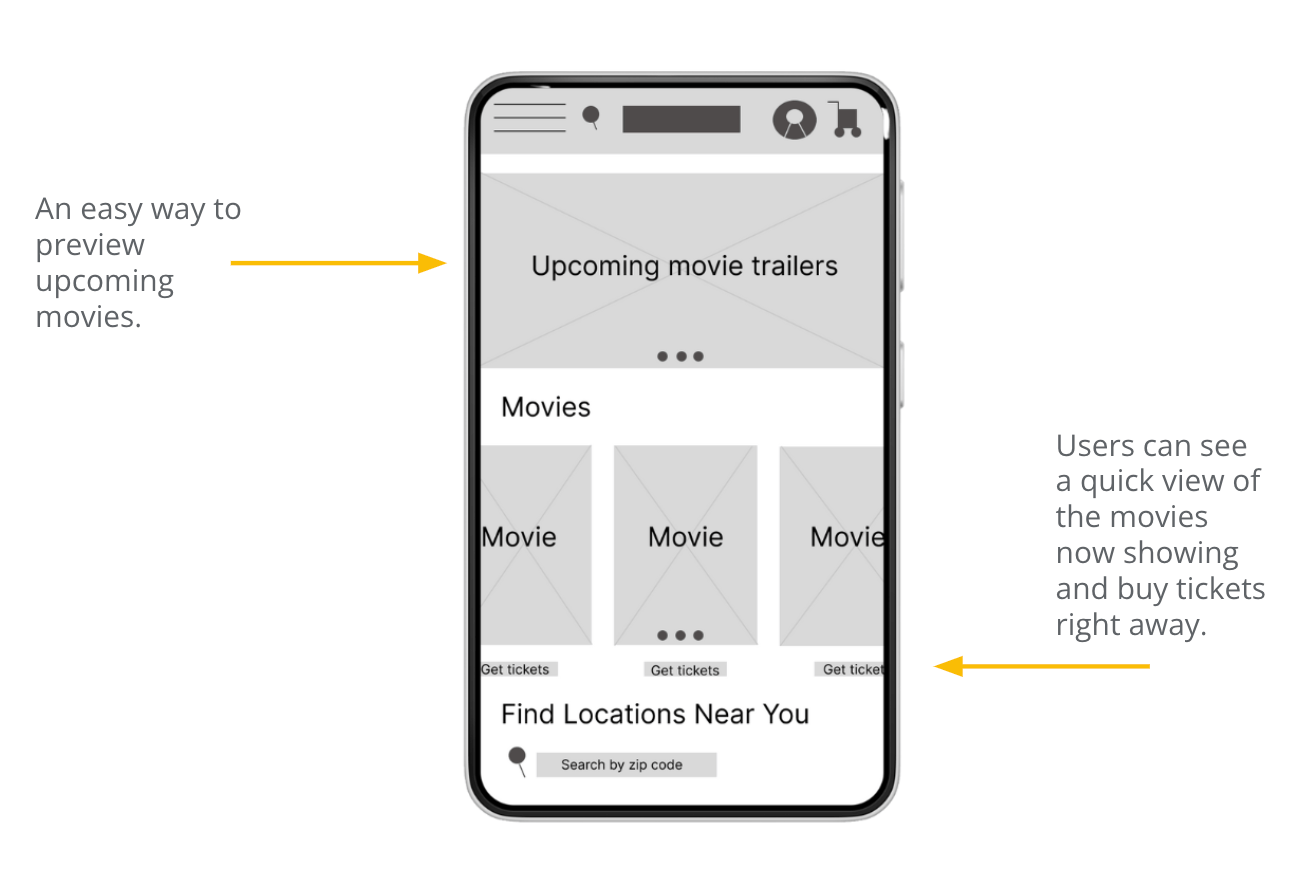
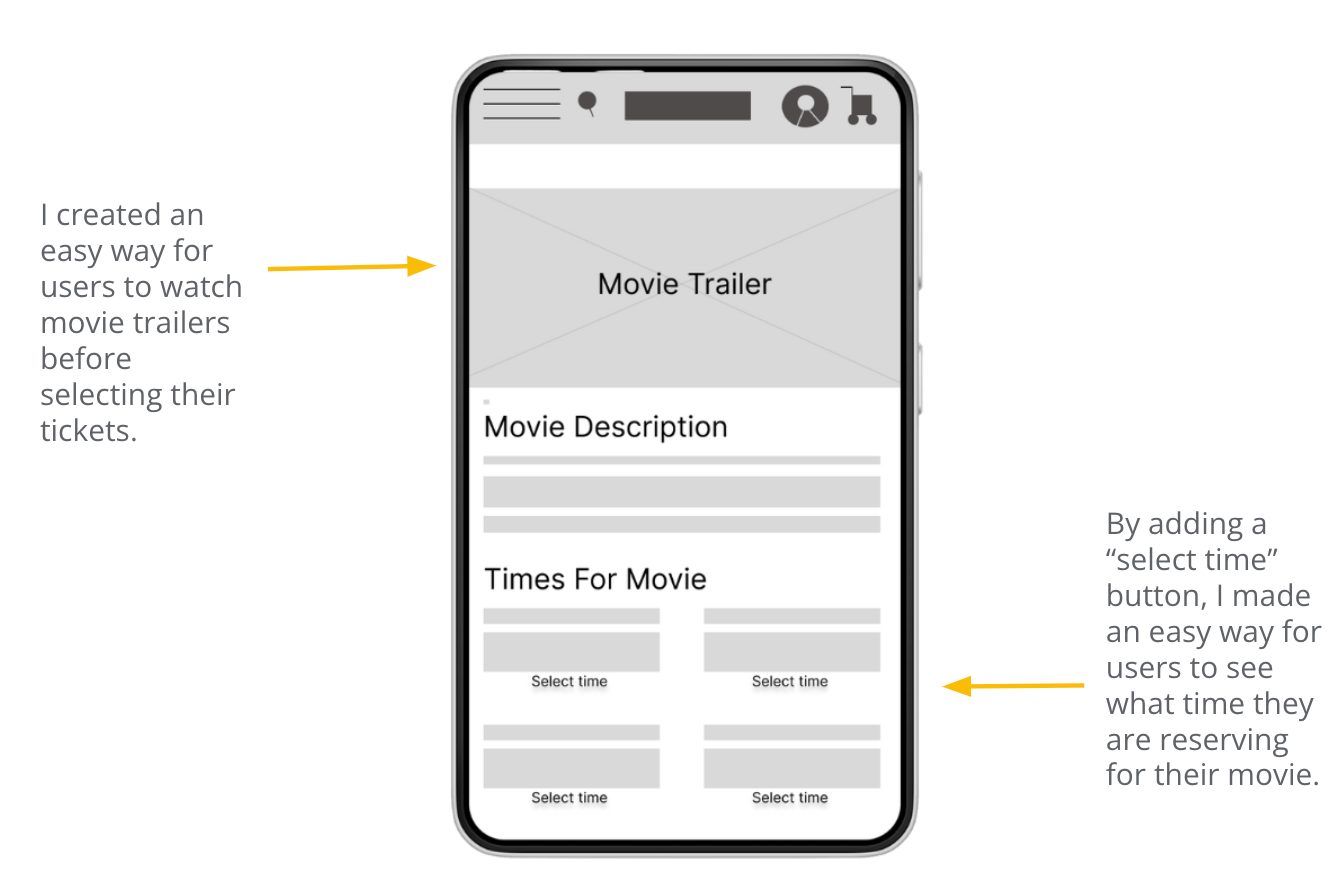
Lo-fi Prototypes
Using the carefully planned digital sketches, I started creating a simple prototype. The main thing I focused on was making it easy for users to build and buy movie tickets. This prototype was designed to be part of a study to see how well it works for users.
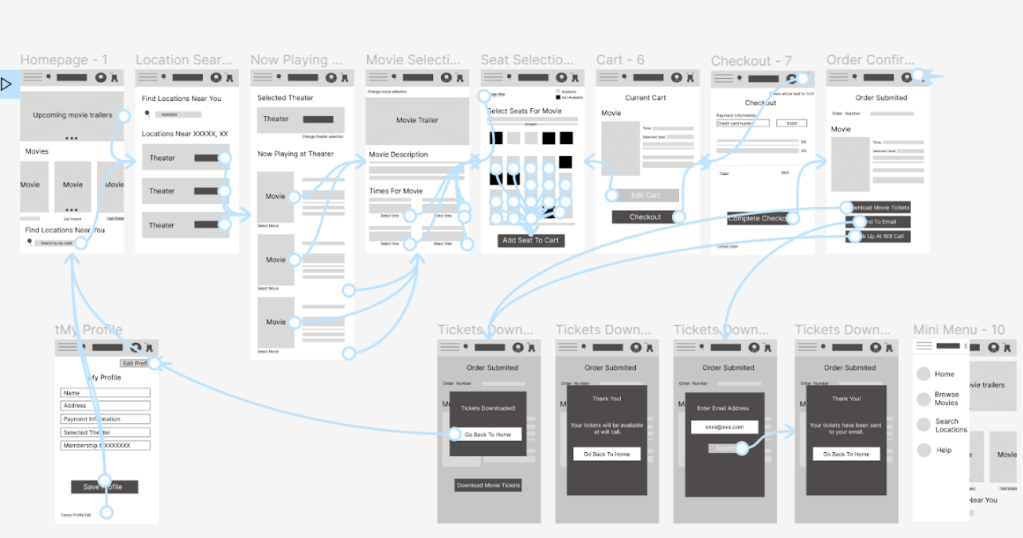
Usability study: findings
I organized two rounds of usability studies. The insights gained from the initial study played a pivotal role in steering the evolution of designs from mere wireframes to fully-fledged mockups. Subsequently, the second study involved a high-fidelity prototype, shedding light on specific areas within the mockups that called for further refinement.
Round 1 Findings.
1. Users expressed a strong desire for a simplified method to identify their location.
2. Users emphasized the importance of having the option to choose multiple seats or tickets.
3. Users underlined the significance of having multiple avenues for redeeming their movie tickets.
Round 2 Findings.
1. Users expressed a keen interest in having the flexibility to utilize alternative payment methods.
2. Users indicated a strong preference for the inclusion of a movie search filter feature, allowing them to tailor their search options to their preferences.
Mockups
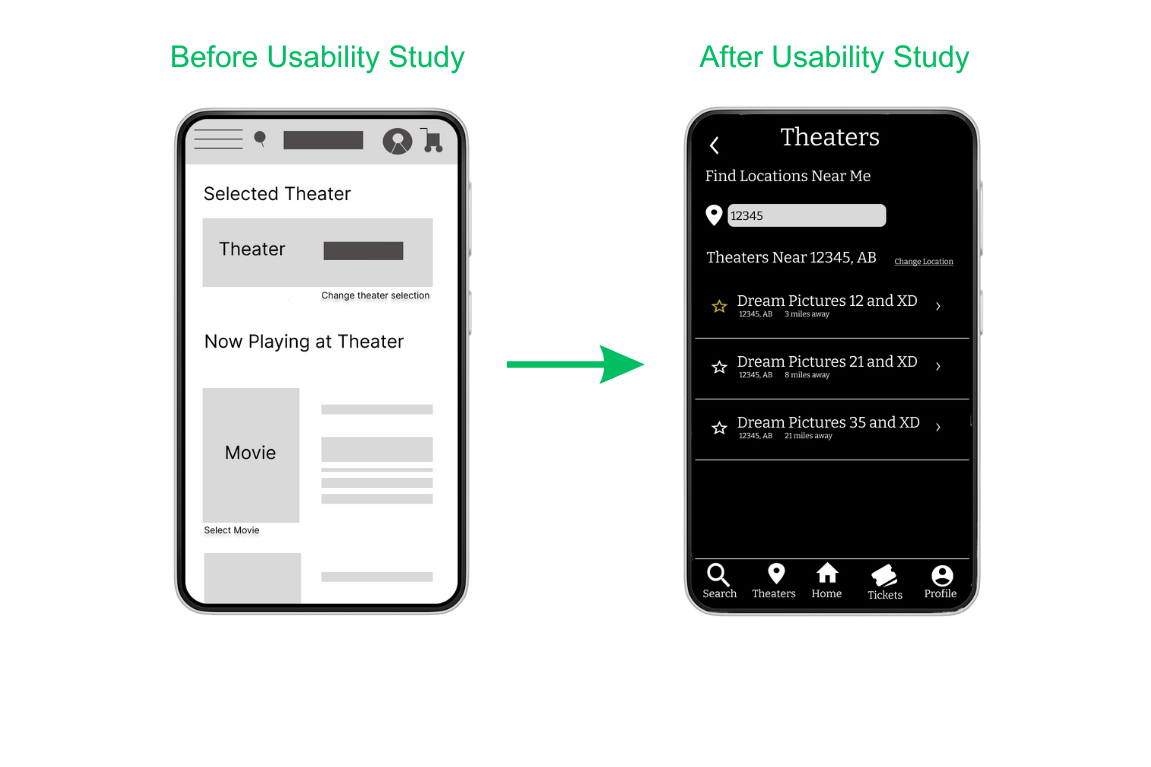
Following rigorous user testing, I embarked on a meticulous design revision journey. This revamp aimed to enhance user experience by seamlessly guiding them towards their nearest theater through a feature that displays the distance from their current location. Furthermore, I introduced supplementary functionalities, including a ‘favorites’ option to enable users to conveniently save their preferred theater. To expedite navigation, a more intuitive bottom navigation menu was seamlessly incorporated, ensuring users could effortlessly navigate through the app with heightened efficiency.
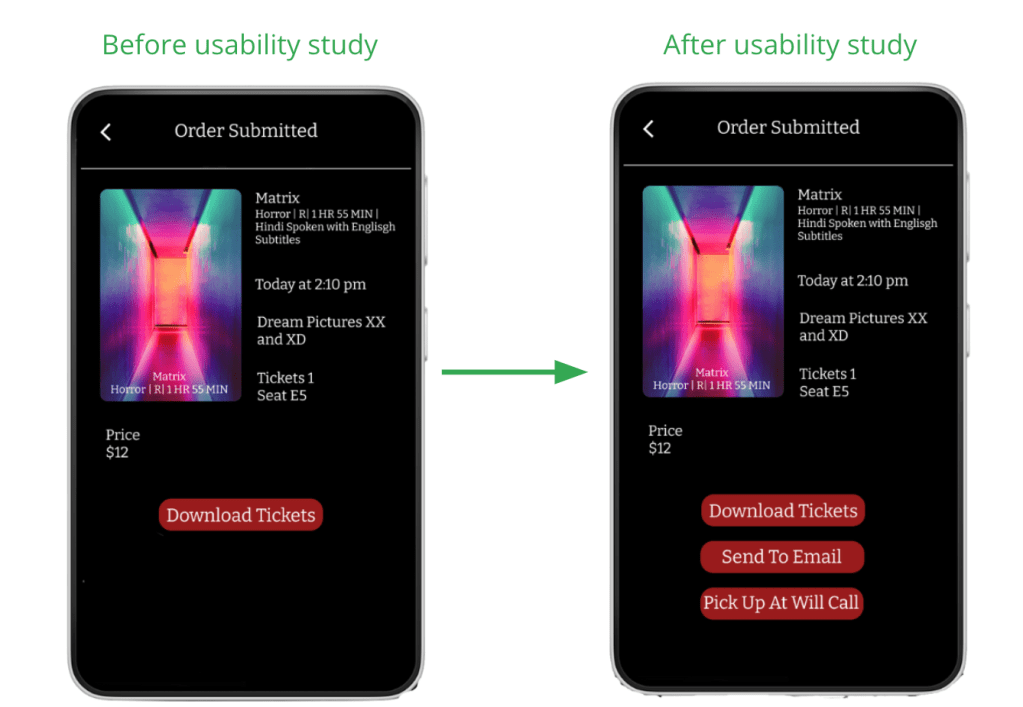
The findings from the usability study underscored the significance of offering users diverse avenues for redeeming their movie theater tickets. In response, I diligently crafted a range of alternatives to cater to their preferences. These options encompassed downloading tickets to their digital wallets, selecting the convenient will call pickup option, or having tickets conveniently sent directly to their email addresses.
High-fi Prototypes
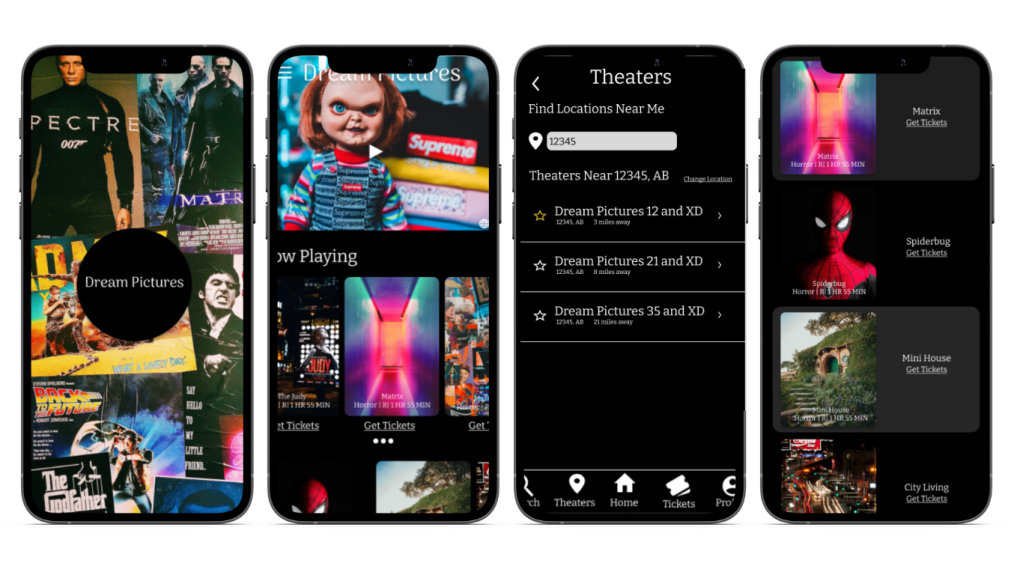
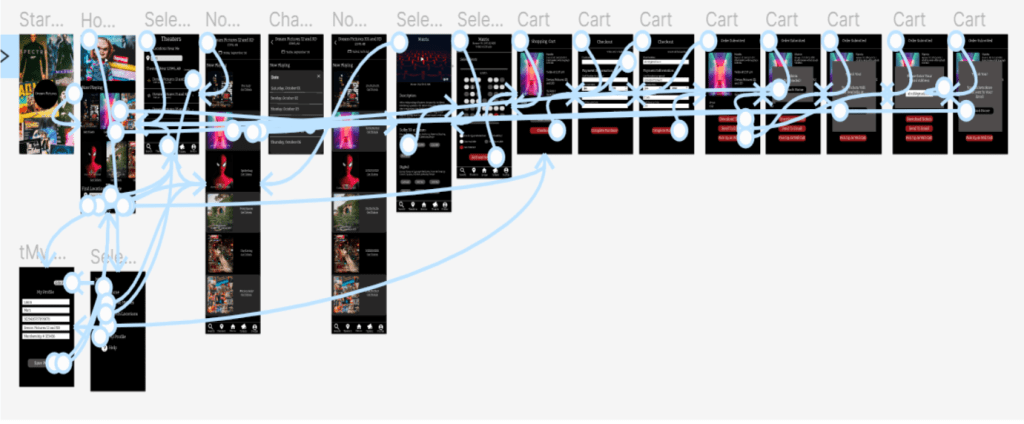
The culminating high-fidelity prototype showcased streamlined user pathways for reserving movie tickets and navigating through the checkout process. This refined prototype adeptly addressed user requirements by incorporating the capacity to pre-book movie seats, while also affording them the convenience of multiple ticket redemption choices.
View the Dream Pictures high-fidelity prototype
Accessibility Considerations
1
Offered a variety of language choices to accommodate users who communicate in languages other than English.
2
Ensured inclusivity for visually impaired users by incorporating alt text for images, enhancing compatibility with screen readers.
3
Enhanced navigation simplicity by integrating familiar and universally recognized icons.
Takeaways
✓
Impact:
The Dream Picture app makes users feel like their needs matter.
One quote from peer feedback:
“I love how fast and easy this app is to use. It’s perfect for my busy life schedule.”
✓
What I learned:
User testing holds paramount significance as it unveils the imperfections within your design. Even in instances where you’re confident in having considered every conceivable scenario, there’s invariably room for refinement and enhancement.
 Tatyanna.design